

Table of Contents
ToggleThe November Surrender
I’ll tell you something unfashionable: I’m bored of black. Not the black of Audrey Hepburn stepping off a plane in Rome, all architectural precision and razor-sharp tailoring. Not even the black that suggests power in a boardroom or mystery at a dinner party.
Rather, I’m speaking of today’s black – this grey November surrender where too many of us scuttle along pavements wrapped in dull, uninspiring monotone.
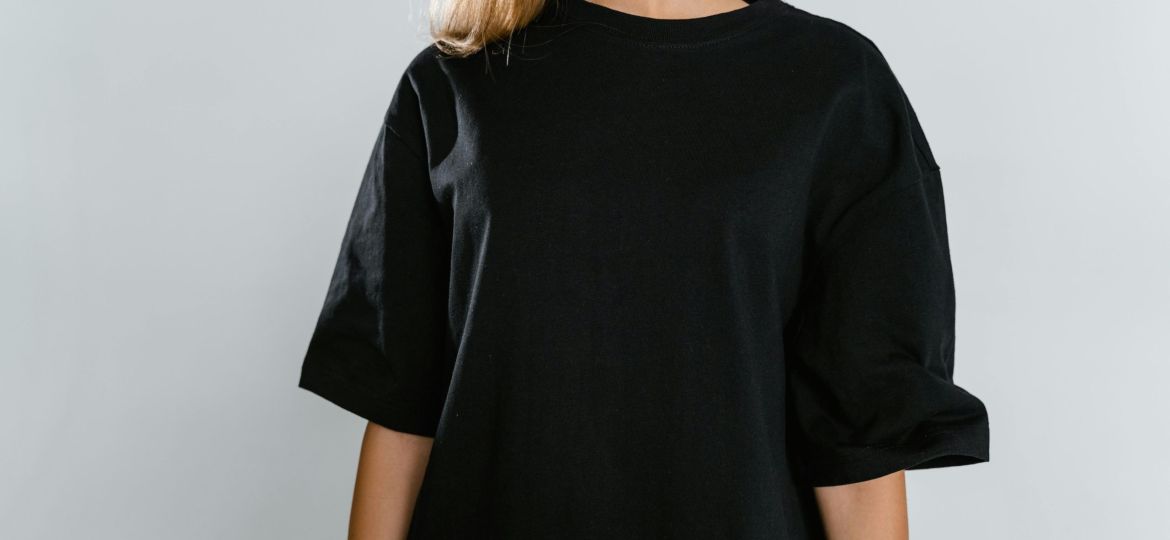
Walk through London on a winter afternoon and count the bodies dressed for their own funerals. Black upon black upon black, layer after shapeless layer, each woman disappearing into the urban fog like a Magritte painting gone wrong. This isn’t elegance. It’s a collective apology for a country that has embraced glumness, despair, and self-flagellation with vengeance.
The Commercial Logic of Darkness
The fashion establishment would have you believe this monochrome moment represents “minimalism,” “quiet luxury,” or some other euphemism for being boxed and imprisoned in black. They point to the runways – The Row’s severe coats, Proenza Schouler’s head-to-toe blackouts, even typically vibrant designers retreating into shadow lines of insignificance.
Fashion historian Emma McClendon has a wry take on the phenomenon. According to her, black is simply less expensive to produce. Throw out colour and your supply chain becomes far more manageable. Put bluntly: it’s “commercially viable” in an industry whose economic outlook is “really bleak.” So we dress for the apocalypse that our social media promotes. Hiding away and bunkering down.
The Skin Assassin
But here’s the danger for many of us. Black is the equivalent of a skin assassin if you are over 50. It strips you of your natural beauty.
Just look around you and you will get an inkling of the scale of the problem. We all do it. But we need to wake up from our colour slumber and strike out in a more colourful direction.
I see the problem in mirrors and the evidence of photographs taken in harsh light. Ten years ago can make an almighty difference. I loved one picture which my husband shot of me wearing my staple black dress. But try as I might – whatever light I now thrust myself into – that same dress now does nothing whatsoever for me.
Instead of looking strong, I shrink.
The Hospital Lift Revelation
One revelation is surely this: it’s important to adapt and cut our cloth to our years. This obvious truth was reinforced a few weeks ago for me in a hospital lift.
Granted, hospital lifts are nearly always depressing places at the best of times, but even so, the image of myself reflected back had me rethinking my wardrobe. When had I started to look so… drained?
What brought this reassessment on? I grew up being told by fashion editors that black was a powerful and sophisticated look. For women over 50, that dictum needs to carry a health warning – at least in my case.
The woman staring back is neither mysterious nor powerful. Just drained and washed out. This is not a look I want to perpetuate. The black that once conferred authority now threw shadows that settled into every line, every texture change, every honest year on my face.
Sophistication shouldn’t translate into looking a decade older, or like a walking corpse. Or put it another way: when you’re twenty and nervous as hell about a presentation or a dinner party, looking poised and maybe thirty-ish is wonderful. Sophistication wins out. But putting ten years on yourself at 50, 60, 70 is perhaps not what we want.
Helena Morrissey and Intentional Dressing
On which note, maybe all of us should take a look at Helena Morrissey’s exquisite dress sense. She has now authored a book, Style and Substance: A Guide for Women Who Want to Win at Work. It’s a fascinating read.
For those who have somehow skipped the name drop, it’s simple. She is the exuberant and highly colourful superwoman of the younger boomer set, starting off as a lawyer but rapidly crossing over into finance.
Her career moved from being a young trailblazer – the only woman out of a sixteen-strong team – to moving into the stratosphere after she joined Newton Fund Management. Her break came in the form of the founder of the firm, Stewart Newton.
When she was still a young fund manager, he encouraged her to be herself rather than a pale carbon copy of her male colleagues. That extended beyond expressing her opinions to also being confident in what she wore.
She took his advice to heart. Instead of attempting to blend in with the male aesthetic of black and navy suits, she opted for colour blocking. Her wardrobe became an eloquent statement of her own sense of worth – setting her apart from the crowd.
Colour as a Statement of Worth and Power
To this day (she is now 59) she favours a style that is feminine and colourful. Whether at work or in a more relaxed mode, she champions jewel-coloured hues – think fuchsia Armani blazers paired with emerald silk blouses. It’s power dressing on stilts, designed to attract attention rather than to be the wallflower of the room.
Of course, no-one would pretend it was only her clothes that turned her into one of the City’s first female CEOs. But she herself credits her clothes with giving her the confidence to speak her own mind rather than to operate in the shadows.
Psychologists now know that her intuition is borne out by science. Colours lift our mood and that of others.
The Science of Shadows
What is certain is that with every year that passes, the danger of being lost in black grows. Black is an inherently unforgiving colour. Harsh black near the face creates shadows that exaggerate skin texture and make more mature complexions appear sallow, tired, and older.
Style experts advise that mid-life women and older women need to keep lighter colours near their faces, to compensate for the fact that our skin is losing its pigmentation. So the contrast that once read as chic now knocks us back.
The Quality Question
But the changes to our skin are far from the only issue we now have to contend with. Another is the cut of the clothes and the textures we can afford. A cost-of-living crisis alongside the farming out of manufacturing means that the elegance incarnated by the drape and cut of the materials that make black or graduated black beautiful is far from guaranteed.
And if you’re wearing black – quality is essential. The difference between a £200 Zara black dress and a £2,000 Max Mara one isn’t snobbery – it’s how the fabric drapes, how the cut forgives, how the black reads as charcoal rather than carbon.
What Hepburn Actually Had
When Hepburn wore black in Breakfast at Tiffany’s, she was first of all still in her twenties and incredibly thin. She was also being dressed by one of the greatest stylists in France, creating sculpture with her body – every seam intentional, every proportion calibrated, the black serving as canvas for form itself.
Even fifteen years ago, The Devil Wears Prada used black-and-white dressing to signal aspiration – a sophistication worth achieving. The black had meaning. It communicated.
Today’s monochrome communicates something far less appealing. Fashion analysts describe the current trend of putting together “capsule wardrobes” – as code for buying less because we can afford less. We’re making do.
Similarly, the neutral palettes that so many designers and brands have pushed out tell a story about the economy we inhabit. It’s fashion as protective colouring, and black as camouflage for economic and social uncertainty. We dress not to be seen, but to avoid being noticed.
The Cruelty of Invisibility
For mature women, the monochrome mandate is particularly cruel. We’re told that colour is “too much,” that we should “tone it down,” that visible women are somehow unseemly. So we comply. We disappear. We wear black near our faces even as it drains the life from our skin. We confuse invisibility with elegance.
A Strategy for Colour
I propose a different approach: making sure that black is never left in its starkest form. Black needs some softening.
Keep the black if you must – in trousers, in shoes, in pieces that sit below the décolletage where harsh contrast can’t savage your complexion. But near your face? Start thinking like a wild painter and make bold statements. Not timid colour; not apologetic colour either – but colour that insists on your presence in the room.
Seasonal insights: the deep plums and aubergines coming on stream this year and next work well with almost any hair and skin tone. Cherry reds will have you, and anyone who encounters you, feeling happier in an instant.
Next, understand your undertones: cool complexions need blue-based blacks, warm complexions need gunmetal alternatives. Better yet, skip the black entirely near your face and let lighter, warmer shades do the work that black once did: commanding attention, communicating confidence, creating presence.
Finally, when it comes to dresses, maybe switch to another block of sophisticated colour that fits your face better. Martini greens and royal purples, or a dark marine blue, are great alternatives. Better still – they are not black and not grey.
The Refusal to Disappear
This isn’t about turning your back on sophistication. It’s just accepting that what worked once for us may no longer serve us. It’s foolish to get stuck on clothes that are now (for us anyway) past their sell-by date. On grey winter days, especially when the light is already dying at four o’clock and the streets run with rain, why on earth would we make ourselves part of the gloom?
The fashion revolutionaries are emerging not from glossy magazines, but from women who simply refused to disappear. Women who wore cardinal red to the office, who paired chocolate brown with maroon, who showed up in butter yellow when everyone expected beige. Women who understood that fashion should enhance life, not drain it away.
The Choice Before Us
So here’s the unfashionable truth: the monochrome aesthetic is an aberration and negation of life. Real fashion – the kind that takes risks – has lost its love affair with monochrome dressing. Let’s move on too.
The question is whether you’re coming along, or whether you’ll keep dressing for your own funeral, waiting for permission to stop being invisible. I know which one Audrey would choose.
