

A Fifty-Year Silence is a deeply moving account by Miranda Richmond Mouillot of her journey to uncover what happened between her grandmother, a physician, and her grandfather, an interpreter at the Nuremberg Trials — a man who refused to utter his wife’s name aloud after she left him.
This collapse of a love story fascinated Miranda because it was cloaked in silence by the very people who lived it. And, as it happened, she adored her maternal grandmother. She writes of her with intense affection:
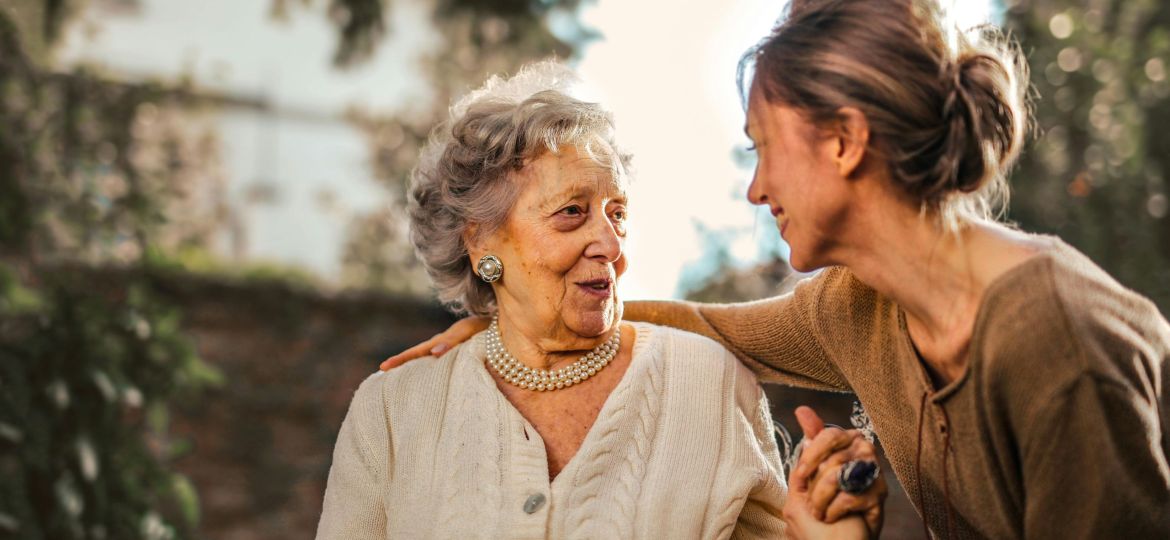
“Grandma and I were so close that when I shut my eyes, I can still feel her silver hair, which even in extreme old age was soft as silk and streaked with coal black. I can see her before her mirror in a pale pink slip, rubbing face cream on her high cheekbones and into her neck, all the way down her graceful shoulders, doing ‘face yoga’ to keep away the wrinkles, her gold and turquoise earrings quivering in her ears. They had been in her ears since she was eight years old, when her ears were pierced in the Romanian Jewish equivalent of a bris (the ceremony of circumcision) for a girl.”
Yet for all this intimacy, for all the tenderness between grandmother and granddaughter, an entire universe of experience remained locked away. Anna and Armand’s marriage — a love forged during the pandemonium of the Second World War, tested by harrowing escapes across snow-covered mountains from France to Switzerland, and ultimately destroyed by the terrible knowledge acquired in the aftermath of the Holocaust — had been forbidden as a topic of conversation. The very people who had lived this extraordinary story refused to speak of it, creating a void that would awaken and reshape their granddaughter’s understanding of her own life.
The Archaeology of Memory
To uncover the roots of their entrenched silence, Miranda abandoned her own plans for the future and moved into their stone house in France — now a crumbling ruin. There she immersed herself in letters, archival materials, and family remnants, piecing together stories from her two reticent grandparents.
What emerged was not just a detective story of painstaking research but a meditation on how trauma moves through generations like an underground river, surfacing in unexpected ways.
Richmond Mouillot discovered that her own childhood had been shaped by her grandparents’ unspoken experiences even when she was unaware of it. In hindsight, she could see the traces everywhere: her instinct to plan escape routes, her habit of keeping shoes by the door “in case a hurried exit had to be made”, the presence of candles and matches always within reach, and her mother’s tendency to snap off the radio or fold away the newspaper at the mention of certain subjects.
The ten-year quest that followed — far longer than the single year she originally set aside — revealed how silence can become its own form of inheritance. When she began, she had barely any factual information, not even the date of her grandparents’ marriage. Yet she persisted, becoming what she calls “an archaeologist, or an undersea diver,” convinced that by living in their abandoned stone house, by piecing together fragments from refugee files and half-told stories, she might finally excavate the truth buried beneath decades of deliberate forgetting.
The Burden of Unspoken History
The revelation at the heart of the silence proves devastating in its scope. It was the tragic knowledge Armand acquired at Nuremberg that ultimately destroyed his marriage to Anna.
As one of only two Jewish interpreters at the Nuremberg Trials, Armand bore witness to testimonies that would have been unbearable for any human being — but carried a particular weight for someone who had narrowly escaped the machinery of genocide himself. The knowledge he gained there — knowledge that Anna, significantly, did not share — created an unbridgeable chasm between them.
This speaks to something profound about how historical trauma operates within families. The burden of bearing witness, of holding terrible knowledge, can become so heavy that it crushes even the strongest bonds of love. Armand’s silence was not mere obstinacy but a form of protection — though whether he was protecting Anna from the horror he had learned, or himself from having to articulate it, remains uncertain.
The Ripple Effects of Silence
As Miranda reconstructs how Anna and Armand braved overwhelming odds, and how the knowledge her grandfather acquired at Nuremberg destroyed their relationship, she wrestles with the legacy of trauma, the burden of history, and the complexities of memory.
She also finds herself learning not just to survive but to thrive — making a home in the village, falling in love, and finding peace within the silence she once sought to break.
What makes this story so compelling is how it demonstrates that family silence creates its own inheritance. Even as Richmond Mouillot set out to forge her own path, Armand and Anna “exerted an undeniable influence” over her choices — including her decision to settle in France, the country where her Romanian grandmother and Swiss-born grandfather had met, fallen in love, and feared for their lives:
“The country they both regretted and refused to live in, where they’d bought and abandoned an ancient stone ruin.”
The very house she chose to inhabit became a form of communion with the untold story — a way of listening, with her whole being, to what could not be spoken. Her decade of research was not simply about solving a family mystery. It was about ensuring that her grandparents’ extraordinary story of love, survival, and heartbreak would not be lost to the kind of silence that so often swallows family history.
The Urgency of Preservation
Richmond Mouillot’s experience illuminates a universal truth about family memory: how easily entire lifetimes can slip away when those who lived them choose silence — and how that silence can reverberate through generations in ways both subtle and profound.
With warmth, humour, and vivid, sensory detail, she brings her grandparents’ outsize personalities and daily struggles to life. A Fifty-Year Silence is both a heartbreakingly personal love story and a meditation on every family’s relationship with its past.
At one point, when Richmond Mouillot was struggling with her research, she asked herself: given all the “anonymous drops in the rainstorm of history,” was there any point in focusing on Anna and Armand? The answer is a resounding yes.
Many families carry within their older generations stories of love, loss, survival, and adaptation. While not all family histories involve the dramatic sweep of war, most hold their own mysteries and turning points. The question for all of us is how to preserve these for future generations.
In my own family, there were — and are — countless storylines future generations may one day wonder about. They form part of our shared mythology: the disapproved love affairs, the stillborn child, the accident that changed everything, the scandal no one quite forgot. These narratives, painful or tender, create a sense of belonging — even as they reveal the fractures of our past.
My grandmother, for instance, was forever marked by the early loss of her brother at the Somme. Another grandmother, raised in Norway, once played and danced at the royal palace and knew Queen Maud herself. Her father — whom I never met — was responsible for rescuing the gold reserves of Norges Bank during the First World War.
And yet there were darker undercurrents: her mother, who was Jewish, was forbidden by her banker husband to speak of her heritage. He had discovered it late in their engagement and informed her stiffly that while he would “honour his word,” her background must never be mentioned again. (This, despite my great-great-grandfather having once owned — and lost — a shipping line to one of the Rothschilds.)
That grandmother, whom I associate with depressive silences, lived a life of interrupted hopes — losing both a daughter and a husband by the time my mother was twenty-five. You see, every family holds a library of memories. And I suspect you could uncover similar revelations in almost any lineage.
The elderly woman who never speaks of why she left home at seventeen. The grandfather whose eyes go distant when certain topics arise. The aunt who changes the subject when a particular decade is mentioned. Seek, and you will find.
The Gift of Witness
Not all family histories are so dramatic, but one truth remains constant: people cannot speak beyond the grave. That’s why more and more of us, at a certain point in adulthood, feel compelled to record the lives of our parents and grandparents.
And if you’ve reached the stage where you know there is more life behind you than ahead, then perhaps it’s time to consider creating your own recorded memoirs or film tributes for future generations.
The act of preservation is an act of love — a recognition that every life contains a universe of experience deserving remembrance.
Miranda Richmond Mouillot’s ten-year quest to break through her grandparents’ silence reminds us that the most important stories often require the greatest effort to uncover. In learning to “live her life forward, even as the past swirls and eddies around her,” she offers a model for how we might honour both our inheritance and our independence — how we can preserve what deserves saving, while still forging our own paths into the future.
Wise Up
What, then, about us? If her story resonates with you as it did with me, perhaps it’s time to record your own parents or grandparents before they grow too old and forgetful. The clock is ticking. If we don’t capture their stories, how will our children — and their children — ever know them?
This is the “generational wealth” that truly matters: knowing our heritage, understanding our family legends, and feeling rooted in who we are because of where we came from.
