

If you’d been reared on the films of Ingmar Bergman you’ll know that his portrayal of Swedish family life was anything but cozy. Whether it was Scenes from a Marriage, Autumn Sonata, Fanny and Alexander or even the semi-autobiographical Wild Strawberries, the inter-relationships were at the very least cold, more often destructive not to say cruel.
Much more recently I was hooked by what some called the Downton Abbey of Sweden – namely the film Vår tid är nu (English translation: Our Time is Now) about a wealthy family, the Löwanders, who own and run a restaurant. Most of the drama of the English version called “The Restaurant” comes from the fact that the siblings engage in cut-throat politics to become the main or even sole inheritor.
In the process there are many twists and turns, many outright betrayals, snobbery and ultimately, tragically, the suicide of the oldest brother. Throughout most of the 32 episodes, the surviving parent (Helga) manages to remain at the helm, relishing her power to bestow or withdraw favour. The series is one of the most explosive demonstrations of sibling rivalry I have ever watched.
I have two brothers and two sisters. And I’m pretty certain that it would be a stormy affair – as each of us jostled to get our voices heard. Somehow the co-founders of House of Dagmar, all of them, have threaded their way through the potential hazards of running a family business. More impressively, they have founded it from scratch; a period in any business when strains break out at gale force.
Table of Contents
ToggleIt Started With a Seamstress Who Loved Magazines
The name Dagmar initially sent me down a historical rabbit hole – surely this referenced the legendary 12th-century Danish queen? “There was great joy all over Denmark, that Dagmar had come to the Land,” went the medieval song.
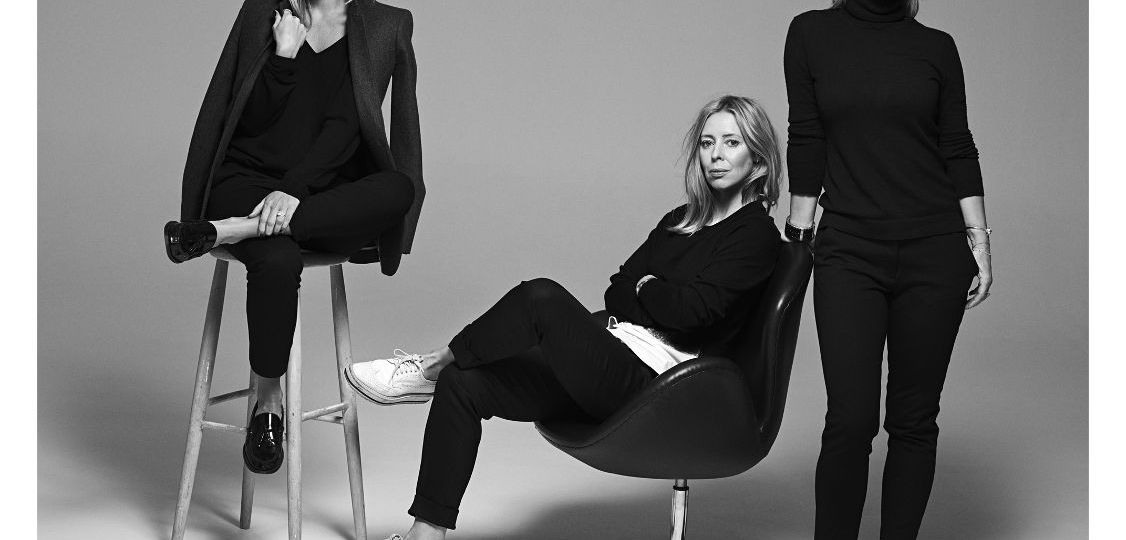
Actually, it’s far more personal. Dagmar was the sisters’ grandmother, an upmarket seamstress with exquisite taste who would study magazines and recreate the designs through her own patterns. All three sisters – Karin, Kristina, and Sofia – credit her with igniting their passion for fashion.
But the tribute runs deeper than a name.. When they founded the company in 2005, they were determined to honour not just her name but her values: quality, craftsmanship, timeless style.
How to Run a Family Business Without Family Therapy
The family worked hard to avoid disagreements by outlining their mini-kingdoms from the beginning.
Each sister arrived with distinct professional experience. Karin had spent eight years as a buyer at H&M, making her the natural CEO for brand management and PR. Kristina had studied at Paris’s prestigious ESMOD, then worked with Christian Lacroix – perfect credentials for head designer. Sofia, with her economics degree, took charge of commercial operations.
Clear roles helped, but they went further: hiring a communication expert to help navigate potential conflicts before launching. It’s this kind of thoughtful preparation that separates successful family enterprises from cautionary tales.
What do they make? “Clothes for women who desire pieces for a lifetime – classic enough to keep but edgy enough to want to wear forever,” as they tell anyone who questions the prices. So yes, they’re in the tricky nearly affordable range higher than mid-range (think €200-800 per piece), but without the inaccessibility of true luxury. On a par with expensive hotels that you go to for an anniversary or special occasion.Or as Sofia puts it: invest in garments you can wear a hundred times. Although I’ve noticed she’s increasingly upping the number now to two hundred!
Yes, there’s black – this being Sweden. But their palette extends far beyond monochrome, particularly in their celebrated knitwear. As for their famed architectural silhouettes they are structured, modern and sophisticated
In Defense of Crossing the Line
One way in which the house of Dagmar stands out is in its ‘ Thoughtfulness’.
A decade ago their evenhandedness and openness to other cultures would have seemed unremarkable. Now its one of the things that defines them. Writer Lea Ypi recently lamented the “increasing monoculture” corralling younger designers, afraid of self-appointed cultural police who slap down anyone imaginative enough to borrow from cultures not their own. What was once respectful interest is now condemned as colonial robbery.
This anorexic attitude to creativity extends further. Artists are discouraged from even looking sideways to related fields – as if a fashion designer shouldn’t draw from sculpture, or a musician from architecture.
Keep to what you know. Don’t show off your references. Be streetwise. That’s the sloganized advice turning us into cultural slobs. This cultural reductionism would be laughable if it weren’t so damaging. It produces what Ypi identified: talented people acting like cultural hermits.
The Dagmar sisters have no truck with these hang-ups and restrictions. They’re transmitters of culture, not destroyers. “We’ve always drawn more inspiration from other creative fields, such as architecture and art, than from the fashion industry,” they explain. They even dedicate part of their website to dialogues across disciplines.
Their fashion isn’t trend-driven; deliberately so. Because trendy means fast throwaway fashion. Instead they draw on a wider vocabulary: architecture, art history, sculpture, design movements across eras and geographies. The result is clothing that feels both contemporary and timeless, refusing to be limited by anxieties about who’s “allowed” to be inspired by what.
Running through nearly every collection is this sympathy for artists – many Scandinavian, but not exclusively. Art Deco meets the 1980s meets contemporary sculpture. Their current bestseller is a top inspired by the van Arkel piece hanging in Sofia’s home – conversation between art and fashion flowing both ways.
Another early collaboration was in 2015 when they joined forces with the Swedish singer Elliphant for their collection called Save the Grey: The Spring/Summer 2015 collection from House of Dagmar is inspired by the wayward shapes and colours of the mountains. Seen from above, and how the rivers meander around the mountains to create striking patterns.
Swedish singer Elliphant is the name behind a foundation called Save the Grey idedicated to protecting the grey endangered animals. Her song ”Save the Grey” was written especially for House of Dagmar and three Save the Grey items are included in the collection. A portion of the proceeds went towards the protection of endangered animals
What the sisters understand – and what the cultural police miss – is that creativity has always been conversation across boundaries. Japanese designers transformed Parisian fashion. African textiles influenced European pattern-making. Scandinavian minimalism borrowed from Japanese aesthetics. This isn’t theft; it’s the natural flow of human creativity, which has never respected the artificial borders we try to impose on it.
The alternative – everyone rigidly staying in their cultural lane – produces exactly the monoculture Ypi warned against. Creative death masquerading as respect.
The Dagmar sisters offer a different model: intelligence, curiosity, and cross-pollination producing something richer than cultural isolationism ever could. They design for women who’ve read books, visited galleries, travelled, thought about things – women who understand that nothing exists in isolation. Not art from architecture. Not fashion from sculpture. And not beautiful clothes at the expense of the environment.
Sustainability Without the Sanctimony
It’s no accident that three Swedish women would build a fashion house on environmental principles. Or more precisely, that they’d do it in 2005 before it was fashionable and that they’d approach it out of conviction rather than reluctantly.
Sweden was the first country in the world to establish an Environmental Protection Agency – in 1967. It hosted the first UN conference on the global environment in 1972. Environmental consciousness has been integrated into Swedish education since 1969, which means Karin, Kristina, and Sofia were taught to think critically about environmental impact from preschool onwards.
This isn’t Greta Thunberg territory – righteous teenage activism. This is something deeper and quieter: a fifty-year cultural project that’s produced generations of Swedes who simply can’t imagine not considering environmental consequences. In fact, they have a physical, direct relationship with the land that most Europeans don’t. Eighty percent of Swedes live within three miles of a national park or nature reserve.
There’s also lagom – the Swedish concept of “just the right amount.” Not excess. Not deprivation. The right balance. It shows up everywhere in Swedish culture, from work-life boundaries to design philosophy. And it certainly shows up in a fashion brand that tells you to buy one good piece you’ll wear two hundred times rather than twenty cheap ones you’ll discard.
So when the Dagmar sisters say sustainability has been “in our bones all along,” they’re not being metaphorical. It’s simply the truth. “For us, it’s just been so certain,” Karin says. “After just a few years, we were like, oh wait, what we’re doing is sustainability.”
Being ahead of the rest of the world has also given them the confidence to tear up their own work if they discover new materials that do less harm to the environment. Prompted by the increasing clamour around climate change – they started, in 2017, measuring and publishing their environmental footprint annually. No cherry-picking. Somewhat to their surprise they were unable to give themselves a clean bill of health. They discovered that 80% of their emissions came from materials production.
Most brands would bury that finding. The Dagmar sisters held up their hands and overhauled their entire approach. Between 2015 and 2019, they joined ECAP an EU-funded project set up to look at the unglamourous side of fashion. For the sisters, ECAP became both reality check and roadmap. Clothing waste, landfill rather than selling off unsold stock, spiralling carbon footprints, garments worn once or twice and then chucked. All of these and more were discussed.
Their innovations tell the story. Some predate their ECAP work others came from additional research. Merino wool was one of their initial double takes and something they sorted out way back in 2008 long before their competitors.
If like me you considered merino a luxury material soft and beautiful to wear against the skin – you’re in for something of a shock. Not necessarily. And highly unlikely if it comes from Australia. The beautiful material turns out to have sinister undertones.
Trigger warning here…A huge amount of merino masks animal cruelty: In Australia where over 80 per cent of merino wool comes from, farmers cut out sheep skin folds around the anus without anaesthesia. Its clearly barbaric and causes unnecessary pain. The reason?.. To stop fly infestations which in turn effect the quality of the wool . The sisters only take merino where this process is done with anaesthetic.
Again the treatment of goats has resulted in a different process of creating mohair and animal friendly fur. The company now sources goat-friend mohair and then to simulate the look of fur stitch this onto cotton in a similar way to the production of wigs. “
On the environmental side they have also gone deep into how they source and treat leather and other materials. We now know that a lot of the most eye-catching hues in leather come from petroleum based synthetic dies. Dagmar has committed to using chrome free leather opting for vegetable processes. What this means in practice is the removal of carcinogens out of rivers and workers’ lungs.
Their cotton too is certified. For me it’s a complete eye opener how toxic the clothes industry has been. In a fascinating interview given with Karin to the blogger A Sustainable Closet, she speaks of the noticeable difference when you’re on the ground visiting farms and factories. Old style cotton production is heavy on water and toxins. “You can see the differences when you visit an organic farm, the people live very close to it. People can have their livelihood there and you can grow food next to the cotton plantation. People would never do that on a regular cotton field, it’s too poisonous.”Finally, there are their covetable down jackets. Astonishingly large proportion of the material used comes from recycled bottles. Somewhere between 80and 130 bottles per jacket depending on the size.
“We always thought natural fibres were good, but then you learn that the production of it is not good, so you have to keep learning,” Sofia admits.
That sentence captures their approach. Shadows here of both Aesopian and Robert the Bruce . The latter famously said to his troops before Bannockburn “if at first you don’t succeed try, try and try again,” Equally fitting he was inspired by seeing a spider endlessly weave its web!
Meanwhile the good news keeps on rolling in. Currently, 90% of their collection meets their Good Choice sustainability standard. But they know there will always be more to do. Now they’re researching Skogens Tyg (“Fabric of the Forest”) which is investigating whether Swedish cellulose can replace fossil fuel-based yarns.
The Anti-Bergman Sisters
The payback on research like this is never immediate. Nor does it automatically generate Instagram buzz. For a start it may turn out not to work. But that doesn’t deter them. Should it work they’d be part of a movement which is changing the world of textile production and fashion.
After twenty years heading design, Kristina moved into furniture design with her new venture, Hyfer Objects. In a family business, this could have triggered exactly the kind of drama Bergman filmed or the Löwander siblings enacted. In their case it seems to have caused everyone to become more energetic. And a slight rethink.
“We were more interested in colours and patterns back then, which we no longer are,” Sofia explains. “Today, we focus on form” creating more timeless pieces. The sculpted styles, are what they want to be associated with – partially because colour is very much a seasonal matter.
Twenty years in, the anti-Bergman sisters have proved something that real families as opposed to fictional ones can avoid family meltdown ( and even run businesses together.) Their grandmother Dagmar had her own creative method: transforming what she saw on glossy pages into wearable garments through skill and determination.
Her granddaughters in turn are transforming the fashion industry although the raw materials are changing. As they see it that is the way of life – constant change whether we’re speaking fashion, family dynamics or most importantly of all our planet.
